
What Is a Coat King? A Groomer’s Guide to Deshedding Rakes
If you've spent any amount of time in a grooming shop, you've probably heard someone reach for a particular type of rake and call it a “Coat King.”
But Coat King is actually a brand name, not the name of the tool itself. It's a little like calling a tissue a Kleenex—the brand name became so familiar that people started using it as shorthand for the product in general.
Today, you'll find this same general style of grooming tool made by a number of manufacturers and described as deshedding rakes, undercoat rakes, coat rakes, and sometimes even dematting rakes.
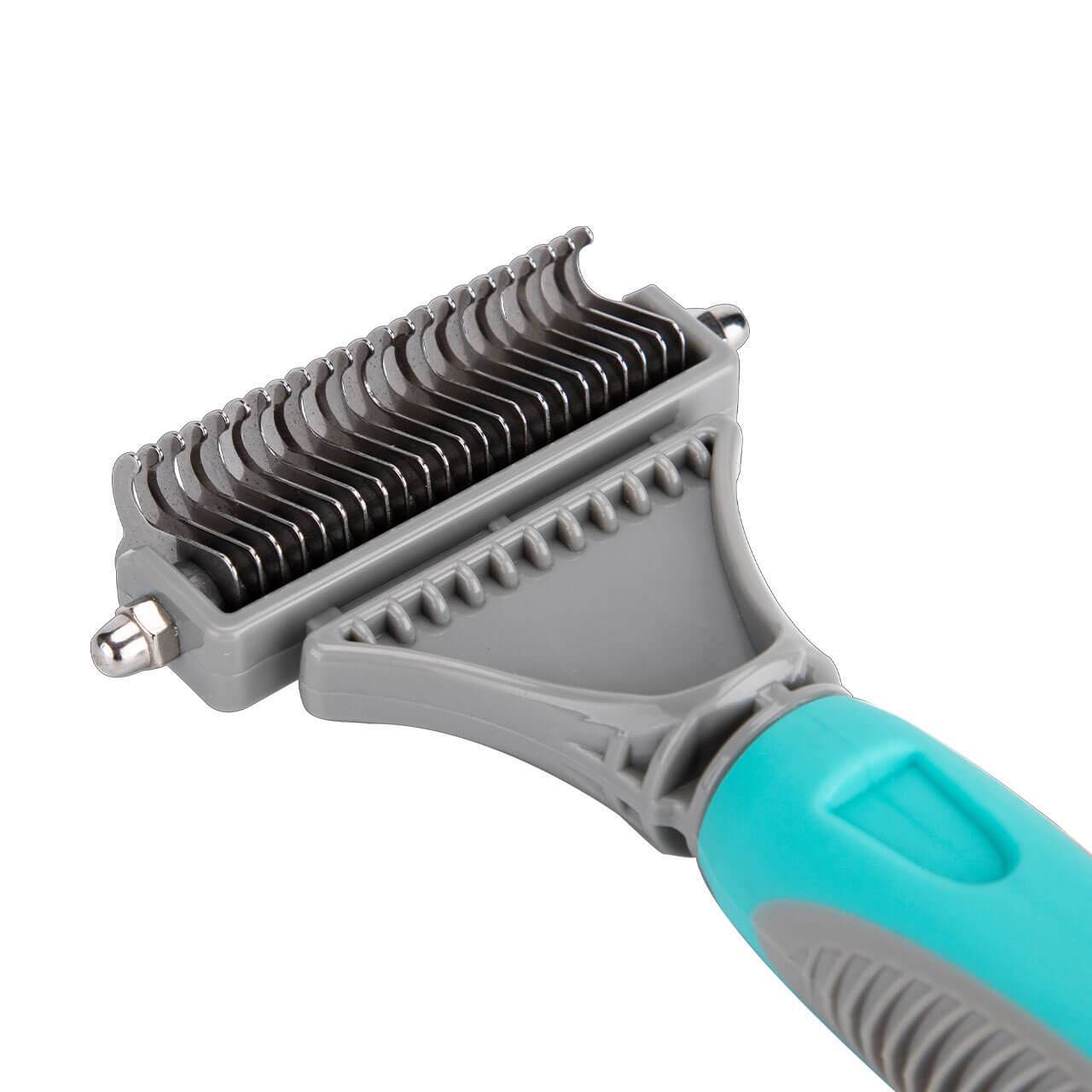
Whatever you call it, the basic idea is familiar to most groomers: a row of curved teeth designed to work through the coat and help remove loose, shedding undercoat.
So, What Is a Coat King?
The original MARS Coat King is a grooming rake designed with a row of curved metal blades that travel through the coat, engaging loose and dead hair as the tool is pulled in the direction of coat growth.
Different versions are available with varying numbers of blades and different spacing between them, allowing the groomer to choose a tool suited to the type and density of coat being worked.
Over time, groomers have become so familiar with the Coat King name that you'll sometimes hear it used conversationally for other tools built on the same general concept.
Think of “Coat King” as the name many groomers know, while deshedding rake or undercoat rake describes the broader category of grooming tool.
Where Did the Coat King Come From?
The original Coat King comes from MARS, a German grooming-tool brand with roots dating back more than a century. The MARS trademark was registered in 1902 and later acquired by ALCOSO, a Solingen, Germany-based manufacturer with a long history of producing cutlery and grooming tools.
The Coat King became one of the best-known tools in the MARS grooming line—and familiar enough among groomers that its name is still commonly used to describe this general style of deshedding rake.
What Does a Deshedding Rake Actually Do?
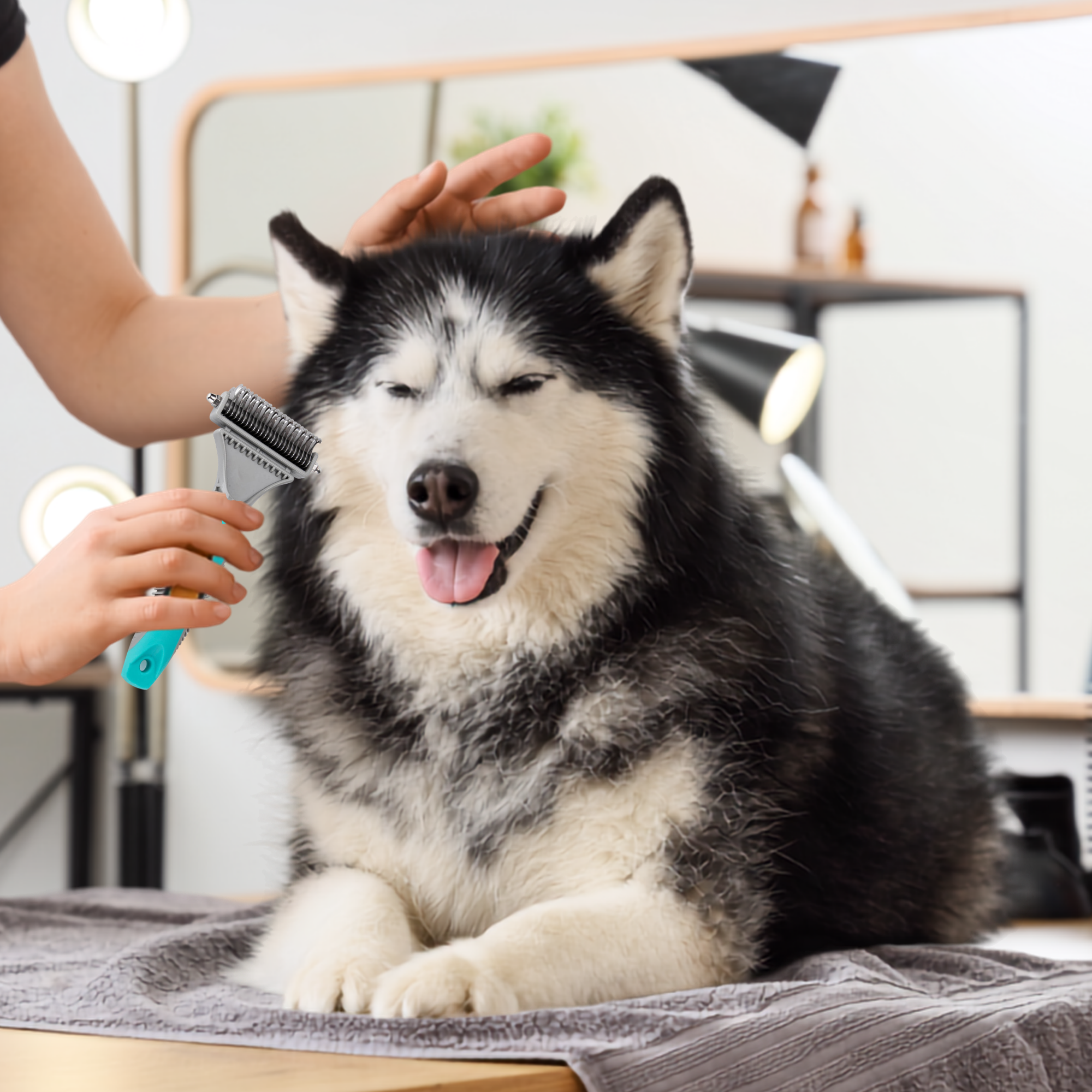
The primary reason to reach for this type of rake is undercoat removal.
Double-coated dogs naturally shed undercoat. Depending on the dog, season, grooming schedule and condition of the coat, that loose hair may come away easily—or remain packed underneath the outer coat.
A deshedding rake helps reach into that coat and pull out loose undercoat much more efficiently than trying to accomplish the entire job with a slicker brush or comb.
This is also where the terminology can get confusing.
Some manufacturers call similar tools “dematting rakes,” but removing shedding undercoat and removing a mat are not necessarily the same job.
Deshedding Rake vs. Dematting Tool
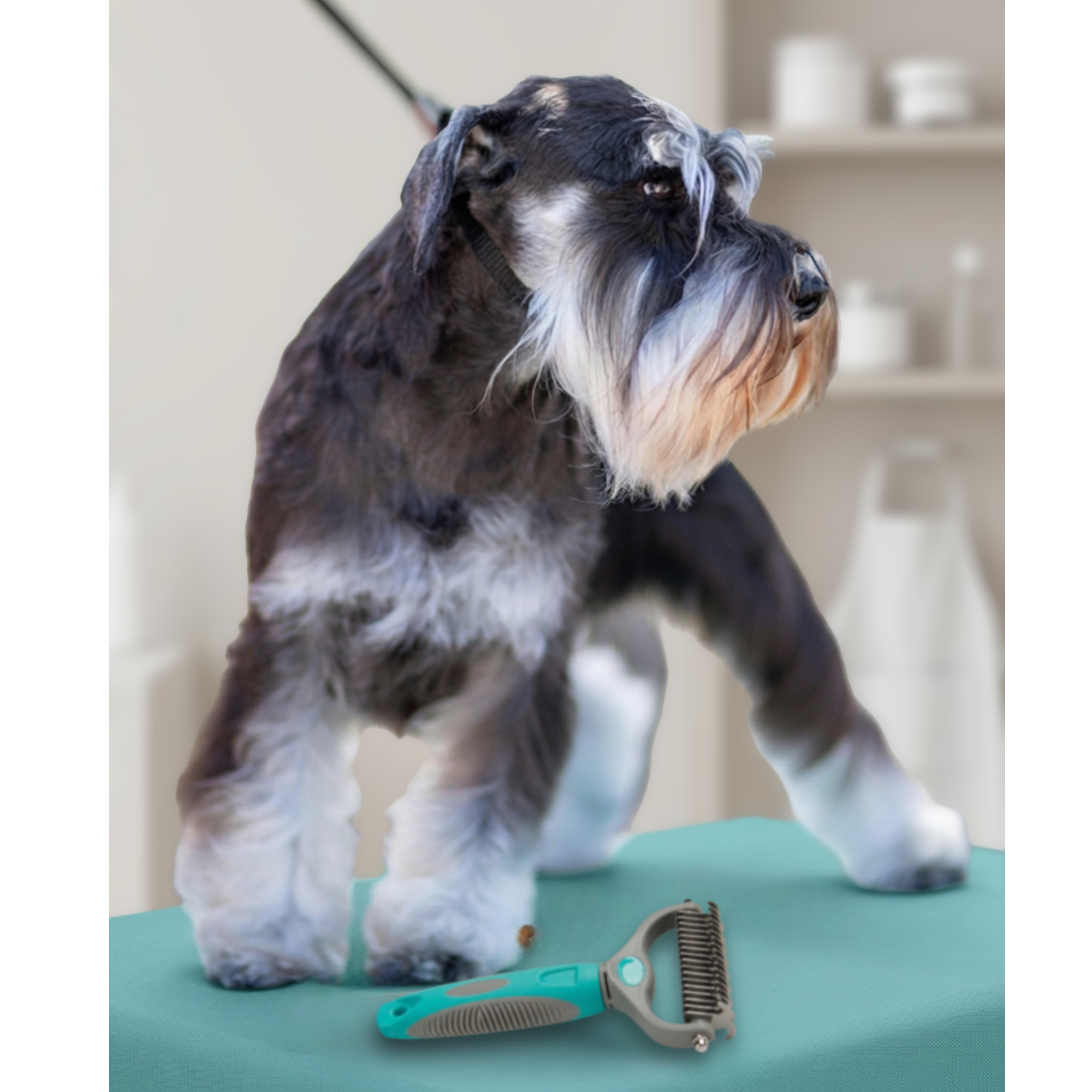
A deshedding or undercoat rake is primarily useful for working through coat and removing loose undercoat.
A dematting tool is designed specifically to help break apart or cut through tangles and mats.
There can be some overlap depending on the design of the tool. In fact, the original MARS Coat King uses hardened steel blades and performs some trimming action while working through the coat. MARS also manufactures blunt Coat King models for situations where the groomer specifically wants to remove loose and dead hair without cutting coat.
For the groomer, the important question isn't necessarily what someone decided to print on the package. It's what the tool does to the coat and whether that's what you're trying to accomplish.
If the goal is getting shedding undercoat out efficiently, choose your rake based on the coat in front of you.
Why Do Deshedding Rakes Have Different Numbers of Teeth?
This is where owning the right rake—or rakes—becomes important.
Deshedding rakes are available with different numbers of teeth and different spacing between those teeth. Those differences affect how the tool moves through and engages the coat.
Generally, a more open configuration can be useful when initially working through a heavier or more densely packed coat, while configurations with more closely spaced teeth can provide finer undercoat removal and finishing.
And that brings us to an important difference between grooming your own dog and grooming professionally.
One Dog May Need One Rake. A Grooming Shop Needs Options.
If you're maintaining the coat of one dog, you may find the rake that works best for that particular coat and never have much reason to reach for anything else.
Professional groomers don't have that luxury.
The dog on your table at 8:00 may have a moderately shedding double coat that's maintained every six weeks. The next may arrive with months of packed undercoat ready to come out. Then comes a completely different breed, coat density and grooming history.
Even two dogs of the same breed won't necessarily present you with the same coat.
A pet owner may only need the right rake for one coat. A professional groomer needs the right rake for whatever coat walks through the door.
That's why having several tooth configurations available is useful in a professional grooming shop.
The downside? More tools. More handles. More things taking up room in your station, drawer or mobile grooming setup.
That's exactly where a double-sided deshedding rake starts to make a lot of sense.
Four Deshedding Options on Two Handles
The Groomer Essentials Double-Sided Deshedding Rake is designed to give professional groomers more versatility without requiring a separate rake for every tooth configuration.
Each rake is double-sided, with a different tooth arrangement on either side.
With the two available versions, groomers can have four different tooth configurations on just two handles.
That means you can select a side according to the coat you're actually working on instead of trying to make one rake do every job.
Start with the configuration that moves comfortably through the coat and allows you to begin removing loose undercoat without unnecessarily pulling at the dog. As the coat releases and becomes easier to work through, another configuration may be useful for removing finer remaining undercoat and finishing the job.
For a professional who works on a wide variety of dogs, that flexibility matters.
It also means fewer individual tools competing for space in an already crowded grooming station.
How to Use a Deshedding Rake
Like most grooming tools, a deshedding rake works best when you let the tool do its job rather than trying to force it through the coat.
Work in manageable sections and move the rake in the direction of coat growth, using controlled strokes.
If the rake won't move comfortably through a section, don't simply add more pressure. Try a more open tooth configuration, work in smaller sections, or use another appropriate grooming tool to prepare the coat first.
Pay attention to what you're removing, too. The goal isn't to keep raking simply because hair is still coming out.
Repeatedly working the same area can remove more coat than intended and irritate the skin.
As professional groomers know, more coat coming out doesn't automatically mean more grooming needs to be done.
Which Deshedding Rake Should You Use?
There's no single answer because there's no single “double coat.”
Coat length, density, texture, shedding stage and condition all affect which tooth configuration will work most efficiently.
That's precisely why multiple options are valuable.
When you encounter a heavy coat, you may need one configuration to get started and another to refine the job. On another dog, you may only need one side of the rake from beginning to end.
Rather than choosing a rake solely according to the breed written on the appointment card, choose the tool according to the coat that's actually on your table.
A Small Tool That Can Save a Lot of Work
Whether you grew up in the grooming industry calling it a Coat King, an undercoat rake, a deshedding rake or simply “that rake,” the concept has stuck around for a reason.
It's a remarkably useful tool when you're dealing with shedding coat.
For professional groomers, however, versatility matters just as much as the basic tool itself. You're not buying a rake for one dog or one coat type. You need tools that help you move efficiently through a schedule filled with different breeds, different coat conditions and different grooming needs.
The Groomer Essentials Double-Sided Deshedding Rakes put four different tooth configurations on two handles, giving you more options for tackling the coat in front of you without filling your toolbox with four separate rakes.
Because sometimes the most useful grooming tool isn't the one that does everything.
It's the one that gives you the right option when you need it.